

Mindful Nutrition: The Power to Transform Your Health and Your Family's Well-Being

Humana Network
Editorial
TL;DR
Mindful nutrition starts with prioritizing your health, learning about your body, and observing your eating habits. The interview explores fiber-rich foods, well-being, and the connection between food choices and the environment.
As women entrepreneurs, we know that energy, health, and well-being are essential to success in every area of life. Yet we often neglect one of the most fundamental aspects of self-care: our nutrition.
This article is based on an interview on the Eleva tu Voz podcast, hosted by Eva Carlasia, featuring Dr. Adriana Cortés, a physician specializing in integrative health. In this revealing conversation, we explore how food can influence our mood, energy, and concentration.
I'd like to share a personal story that changed my perspective on nutrition and its impact on health. Years ago, I watched my mother struggle with chronic illnesses, including rheumatoid arthritis and Sjögren's syndrome. Despite receiving medical treatment, her condition wasn't improving until we decided to radically change her diet.
In my account of her experience, the results were striking: her pain disappeared within ten days, her test results improved significantly within two months, and after two years she was discharged from care, reportedly experiencing no symptoms or relapses for 17 years. This experience changed how I viewed the role of food in health. It is an individual experience, not evidence that dietary changes can cure these conditions.
Three essential ways to care for yourself through self-love
- Love yourself: The foundation of change is caring enough about yourself to prioritize health before illness appears. Our health is the foundation of creativity, productivity, and happiness.
- Learn about your body: Understanding how our digestive, cardiovascular, and neurological systems work helps us make informed food choices. You don't need to be a doctor; learning the basics helps you navigate contradictory information.
- Be open to experimenting with habits: You don't have to wait for a serious diagnosis to change your habits. Try focusing on whole foods for 20 or 30 days and observe your energy, concentration, and emotional well-being.
Foods that support joy and well-being
Our gut is often called the "second brain" because of its connections with the nervous system and neurotransmitters associated with mood, such as serotonin and dopamine. To support a healthy gut microbiome, eat a variety of foods rich in naturally occurring fiber:
- Whole grains: brown rice, oats, quinoa, barley, and rye.
- Legumes: different types of beans, lentils, and chickpeas.
- A variety of fresh vegetables.
- A variety of fresh fruits.
These foods support digestive health and contribute to overall physical and emotional well-being.
Our impact goes beyond the body
Caring about what we eat also means caring about our planet. Healthy eating is interconnected with environmental well-being through the choices we make about natural and processed products and their effects on ourselves and the Earth.
As women, we can play an important role in this transformation through the food choices we make at home and the healthy habits we share with our families.
Let's embrace that responsibility: preparing meals that are both delicious and healthy is possible—and contagious!
Where to find me
Learn more about this approach at bienplantado.com, where I offer a free initial consultation to assess your current eating habits.
Follow me on Instagram @dradrianacortes.
Watch the full video here
Get our best stories
A weekly email with curated editorial content for professional women in tech and business.
Related articles
 Bienestar y Vida Emprendedora
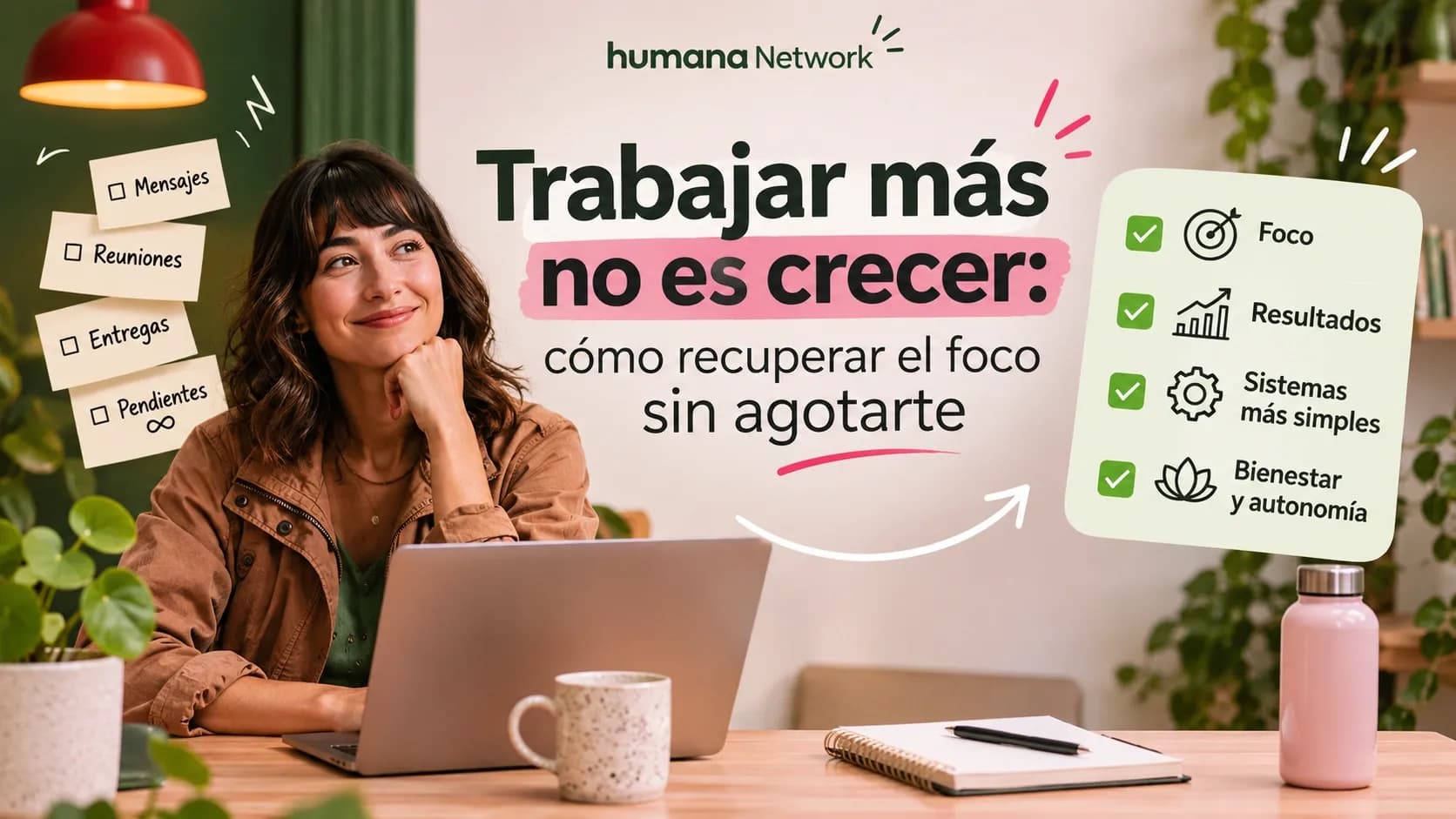
Working More Is Not Growth: How to Regain Focus Without Burning Out
Being busy isn't the same as growing. Learn how to regain focus, reduce repetitive tasks, and build a business without working longer hours.

 Negocios y Estrategia
How to Make a Living Doing What You Love and Make a Positive Impact With Your Digital Business
Making a living doing what you love isn't a fantasy: it's an architecture. Discover how to build a digital business with purpose, profitability, and freedom.
 Bienestar y Vida Emprendedora
Body, Focus, and Decision-Making: A New Perspective on Women's Performance
Explore how the menstrual cycle, sleep, and stress can affect your performance and how to recognize your own energy patterns.
