
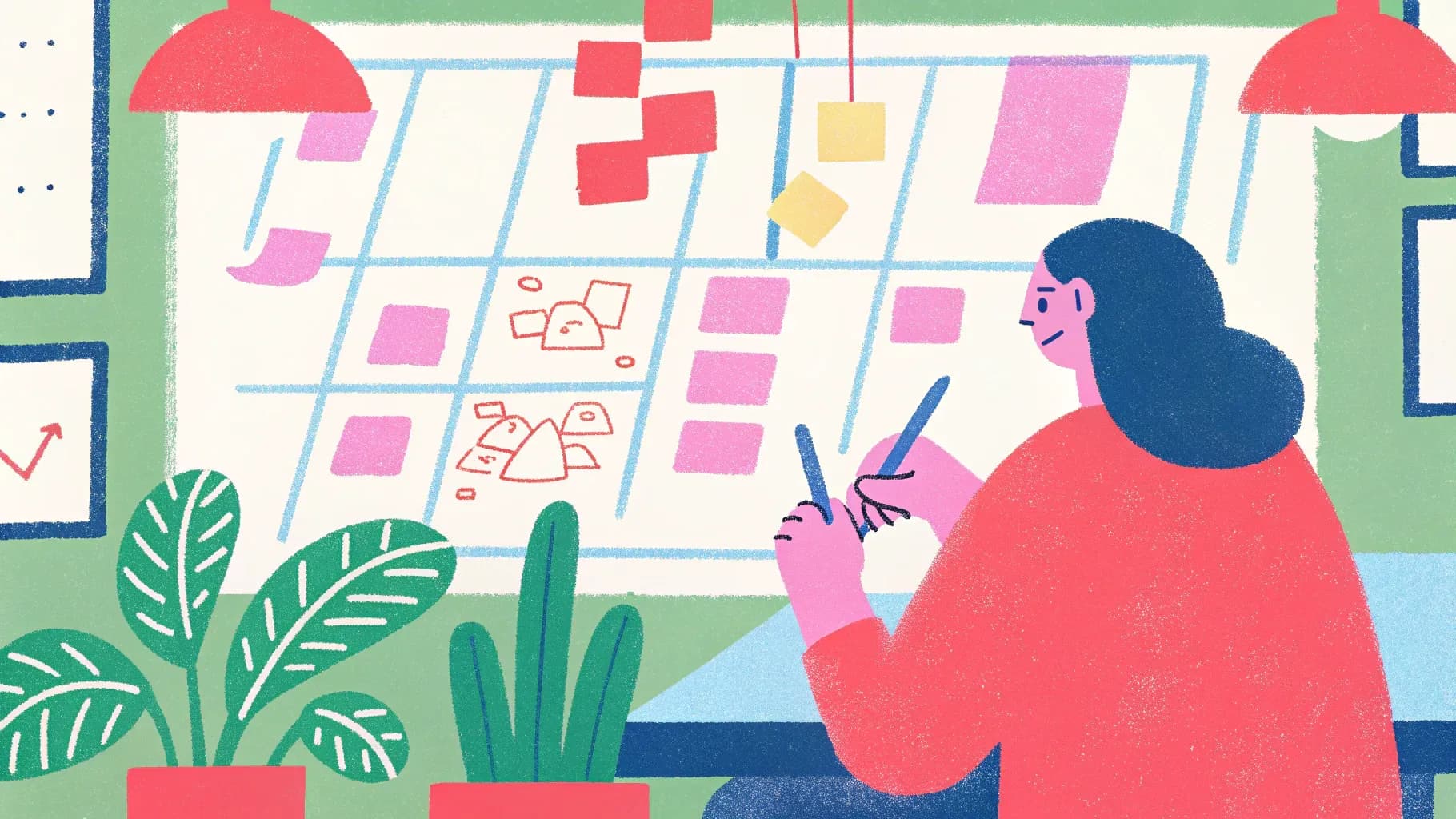
The Power of Mood Boards: Strengthen Your Brand With Creativity

Marina Wabnik
Editorial
TL;DR
A mood board brings together images, colors, textures, and other visual references to define a creative direction. Choose a theme, collect and filter references, arrange them coherently, and check that the result tells your intended story.
A mood board, also called a concept, trend, or inspiration board, is a creative technique that may look like a simple, playful collage.
What is a mood board, and how can you connect it with your business and passions?
This working tool usually combines visual resources such as photographs, illustrations, typography, patterns, textures, colors, gradients, objects, and graphics.
Some mood boards are organized methodically, while others are constructed intuitively. In both cases, visual sensitivity—often called a trained eye—helps us connect these resources coherently.
Carl Jung described creative thinking as a process in which the mind plays with the things it loves, guided by instinct as well as intellect.
What types of mood boards exist, and what are they for?
There are two broad categories: inspiration boards and trend boards.
An inspiration board helps overcome creative blocks, define concepts, express ideas, and establish a project's aesthetic direction.
A trend board helps identify emerging trends through observation of social and cultural behavior over time, or through existing trend reports.
Both can serve many purposes: lifestyle, interior design, fashion collections, styling, art direction, market research, project guidelines, launches, and more. This makes them ideal companions for entrepreneurial projects and personal aspirations.
They act as an appetizer: a starting point that establishes and guides a project's visual universe. Their effectiveness becomes clear when they produce a coherent, compelling story.
How to create a mood board step by step
- Define a theme: choose keywords and decide on a subject.
- Research and gather different images related to that theme.
- Choose a suitable medium for arranging your references. It can be digital or physical: use your favorite app or make it by hand.
- Filter your selection. Review, classify, and select visual material according to your concept or story. What will your board communicate? Coherence is its visual foundation.
- Arrange the images so the composition works visually and communicates clearly. Notice recurring elements and relationships. These patterns provide a visible direction.
- Ask yourself: does the storytelling come through? Does the board communicate what you intended?
- Give your board a title related to its concept or theme. Naming it helps anchor and organize ideas and may even inspire the name of a song, album, collection, film, brand, or new product.
The key is to remember why you are using this technique. What story do you want to tell? What is the purpose? Who is it for? If you can answer these questions, you're on the right track.
One exercise I've found useful in my personal and professional experience is to free your mind and look beyond preconceived ideas. Ask: "If your project (brand, client, and so on) were a , what would it be?" Add as many categories or questions as you need. There are no limits; let the answers flow.
The Pinterest phenomenon
Mood boards have become objects of visual appreciation in their own right. Some people enjoy viewing and collecting them.
Pinterest has become a particularly popular place to discover hundreds of these graphic compositions, offering inspiration and visual enjoyment. After all, aren't they collages we can appreciate? Creating a mood board also brings back a playful childhood experience, connecting us with our inner child.
Ready to create your first mood board? Inspiration is the key. Here are some examples I've created for different projects:
ASTRO BOHEMIA
SWEET PALMISTRY
80s BOLD & GLOSSY
MAGREB
CAMOMILLA
VHS VIBES
PRETTY NASTY
PET SEMATARY
Get our best stories
A weekly email with curated editorial content for professional women in tech and business.
Related articles
 Marketing y Ventas
Does Your Personal Brand Attract Clients and Business Opportunities?
Your personal brand should do more than attract followers. Audit your LinkedIn profile, connect content to your offer, and measure real business opportunities.
 Negocios y Estrategia
How to Make a Living Doing What You Love and Make a Positive Impact With Your Digital Business
Making a living doing what you love isn't a fantasy: it's an architecture. Discover how to build a digital business with purpose, profitability, and freedom.

 Marketing y Ventas
How to Turn Your LinkedIn Profile Into a Gateway to Greater Freedom, Income, and Impact
Learn how to optimize your LinkedIn profile and attract better opportunities, clients, and strategic partnerships.