

From Success to Flourishing: Neuroeducation for Sustainable Leadership

Irene Yagüe Sancho
Neuroeducation & Holistic Well-being
TL;DR
Neuroeducation offers a framework for sustainable leadership: protect attention, understand memory and executive functions, learn from experience, regulate stress and emotions, and question neuromyths. The goal is to flourish, not simply perform.
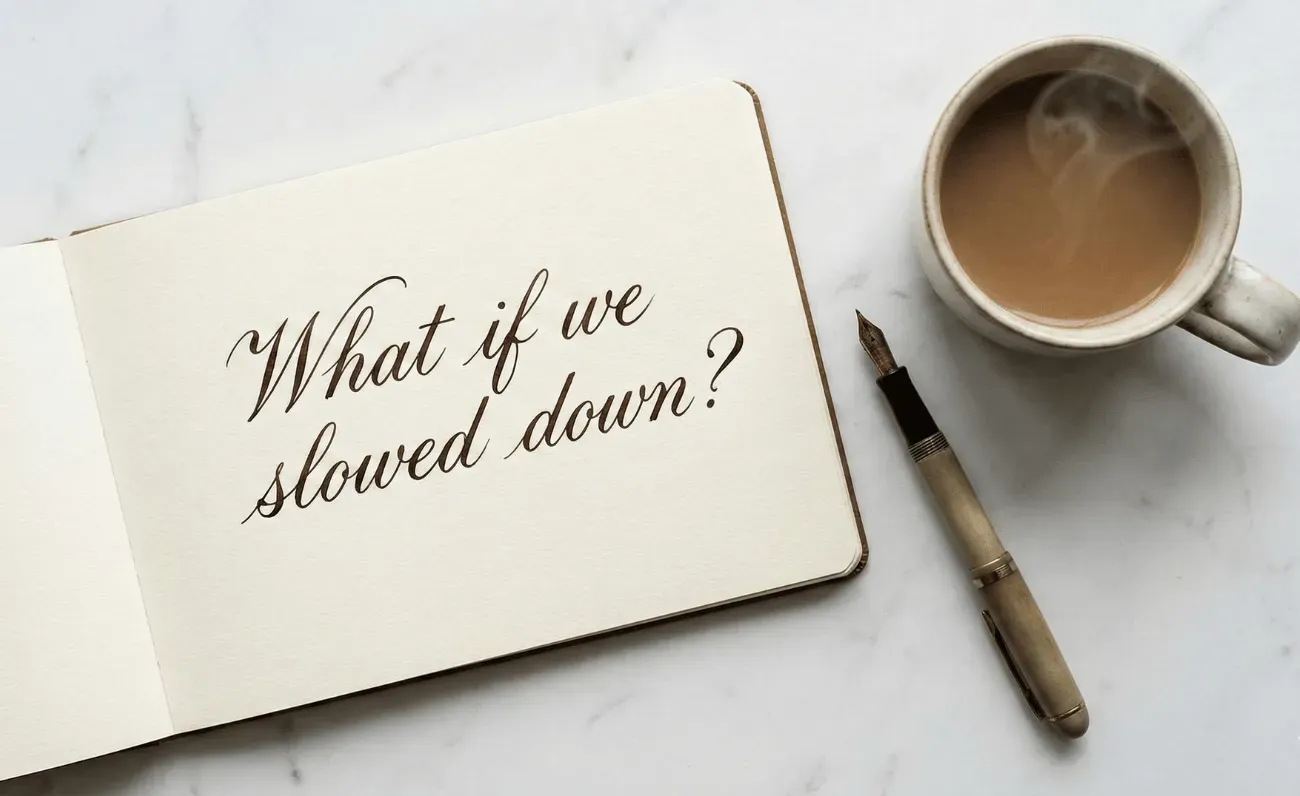
What if true leadership began not with knowing more, but with questioning more?
We make hundreds of decisions every day, many on autopilot. What matters is not their number but the cognitive and emotional state from which we make them. For many women leaders, change is not about doing more but revisiting habits and lessons that worked for years and are no longer sustainable. In recent years, all things "neuro" have become an irresistible temptation in professional settings: neuroleadership, neurohabits, neurocoaching. Some ideas add value; others oversimplify complex subjects. This article offers not universal formulas but better judgment: a clearer, more human way to think about how we learn, decide, and sustain ourselves over time as leaders and, ultimately, as people. Neuroeducation, a discipline integrating neuroscience, psychology, and education, provides four lenses: how we learn and decide through attention, memory, and executive functions; how we learn from experience through growth mindset and resilience; how success differs from flourishing in terms of internal sustainability, stress, and emotional self-regulation; and common neuromyths in professional environments that can distort decisions and habits.
1. Attention and memory: the foundation of your decisions

Leadership involves decision-making. Making good decisions in real contexts also requires learning: adjusting criteria, revisiting beliefs, filling gaps, and maintaining focus on what matters. Neuroeducation helps us understand this by examining cognitive processes that operate daily, often outside our awareness: attention, memory, and executive functions.
Attention isn't a fixed trait or moral virtue; it's a limited and valuable resource. That's why we "pay" attention. When circumstances push us to switch between tasks, conversations, and notifications, multitasking can make us feel highly efficient. But are we? We pay a task-switching cost that affects mental clarity and decision quality (Monsell, 2003). The good news is that attention can be trained, for example, by repeatedly practicing returning to what matters and resisting distractions (Rueda et al., 2005). Mindfulness practices may also help insofar as they train us to return to our focus intentionally (Jha et al., 2007). Meanwhile, memory doesn't work like a file that faithfully reproduces past experiences; it reconstructs them. Reactivating a memory may make it temporarily modifiable before it stabilizes again through reconsolidation (Alberini, 2011). This explains why we sometimes confidently remember something that is incomplete or distorted—a critical issue when leaders make decisions based on memories (Schacter, 1999).
The brain also uses neural mechanisms that support goal-directed control and help regulate thoughts, emotions, and actions in new situations: executive functions (Guillén, 2025). They act like an "internal leadership team," sustaining focus, inhibiting impulses, updating relevant information, and planning (Diamond, 2020). Imagine how often these functions intervene in your daily life. In practice, this means interrupting autopilot just long enough to choose a response: pausing before replying to a tense email, resisting the urge to finalize a decision without data, focusing on a priority, or requesting a second opinion when you notice you're rushing.
These processes don't happen in a vacuum; they depend on conditions. Psychological safety and an emotional climate that allows questions and uncertainty without threat facilitate individual and collective learning (Edmondson, 1999). This is especially relevant where many women leaders feel pressure never to make mistakes or constantly prove their competence—not because of "brain differences," but because of context: expectations, assumptions, and rules that shape how errors and competence are interpreted.
Micro-practice: After a day full of meetings, you realize the key decisions were made at the end, with low energy, hazy memories, and a sense of urgency.
Ask yourself: What conditions can I cultivate so the team can sustain attention? What does the team need for curiosity to emerge—questions, exploration of options, and safety—before closing a decision? How can we regain calm and perspective when a conversation accelerates or becomes polarized?
2. Learning from experience: growth mindset and resilience

A growth mindset is essentially a way of interpreting what happens when things don't go as expected. Faced with a challenge, mistake, or criticism, we can read it as a verdict ("I'm not good at this") or as information ("What can I adjust?"). That difference may seem small, but it changes what we do next: whether we ask for feedback, practice, and learn from others. Research suggests these beliefs influence how we respond to real difficulties and our ability to improve over time (Dweck, 2006).
This perspective is particularly useful in leadership because much learning happens in imperfect situations: difficult conversations, decisions with incomplete information, changes in direction, and conflicting expectations. Rather than seeking perfection on the first attempt, a growth mindset helps sustain continuous adjustment without interpreting every setback as a verdict on your competence (Yeager & Dweck, 2012).
Resilience complements this framework. It involves adapting and recovering, finding your bearings again, and continuing to learn even when things are difficult. Resilience research describes it as a process supported by personal resources, relationships, and environmental conditions—not willpower alone—which matters for sustainable leadership (Masten, 2001). In practice, this means designing helpful systems: team support, a sense of humor, and purpose, moving from automatic self-evaluation to conscious reflection.
Micro-practice: You and your team present an idea in a meeting, and an unexpected objection comes up. You leave feeling uncomfortable.
Ask yourself: What concrete lesson can I take from this situation—an adjustment for next time? What does the team need to treat the objection as information rather than a threat? What did I feel, and what does that tell me about what matters to me or what I need to respond better?
3. From success to flourishing

Professional success is usually measured by visible outcomes: goals achieved, a full calendar, and growing responsibility. Flourishing adds another dimension: how success feels internally and whether it can be sustained over time (Keyes, 2002; Diener et al., 2010). In neuroeducation, this distinction matters because learning, mental clarity, and decision quality depend not only on ability but also on our physiological and emotional state (Arnsten, 2009; Pessoa, 2008).
Stress isn't the enemy. In short bursts, it helps us activate and respond to challenges. The problem arises when that activation becomes chronic: the system remains on alert too long, and we pay the price. Research on allostatic load explains how sustained stress exposure can erode self-regulation resources and affect attention, working memory, and cognitive flexibility (Arnsten, 2009; McEwen, 2006). Decisions become more reactive: we narrow options, interpret signals with more bias, and struggle to regain perspective.
Amid accumulated fatigue, many professionals, particularly women in visible roles, recognize a phenomenon sometimes called burn-on, a nonclinical term (BARMER, n.d.): not being visibly burned out but continuing to function while experiencing sustained internal exhaustion. It isn't a diagnosis, but a practical signal to review the system: am I performing at my own expense?
Emotional self-regulation becomes a functional skill: pausing automatic reactions, regaining clarity, and choosing how to respond. It doesn't mean eliminating difficult emotions but preventing them from hijacking judgment. Complementarily, more pleasant emotional states may broaden mental resources and facilitate creativity, connection, and exploration—key ingredients of flourishing (Fredrickson, 2001).
Micro-practice: The week ends and, objectively, everything got done. But you notice irritability, difficulty disconnecting, and a sense of operating on autopilot even during things you used to enjoy.
Ask yourself: Are there signs of sustained stress I've been normalizing? What would I need to adjust to regain clarity—pace, boundaries, priorities, recovery, or healthy habits? If someone who loves me saw me in this state, what would they think I need right now?
4. Debunking neuromyths
When "neuro" language becomes popular, seductive shortcuts sneak in: simple explanations for complex phenomena. The problem isn't just inaccuracy. These explanations can become beliefs that organize how we interpret events. When those beliefs become rigid—"I'm just like that," or "that's how you function"—they approach a fixed mindset rather than a growth mindset. They reduce curiosity, impoverish alternatives, and influence management decisions: how we allocate tasks, interpret performance, or normalize habits.
The "creative vs. rational brain"
The idea that right- or left-brain dominance explains personality sounds convincing, but oversimplifies integrated processes: creating, analyzing, and deciding don't occur in isolated compartments (Howard-Jones, 2014).
The "male vs. female brain"
This myth is sometimes used to justify leadership styles or supposed innate abilities, again oversimplifying complex capabilities (Eliot et al., 2021; Joel et al., 2015).
Multitasking as a synonym for efficiency
In practice, as discussed above, it often involves a task-switching cost that affects mental clarity and decision quality (Monsell, 2003).
These narratives appeal because they organize reality quickly, but often impoverish it: they reinforce stereotypes and distract from what really matters—the conditions and practices of daily life (Howard-Jones, 2014).
5. Conclusion: leading from curiosity
One simple idea runs through this entire exploration: leadership isn't just about knowing more, but learning better. Learning to sustain attention when circumstances push us toward distraction. Learning to question a memory that reconstructs. Learning to cultivate curiosity before closing off options. Learning to regulate impulses and design conditions—for ourselves and our teams—that support clear thinking.
In a world that rewards speed and immediate responses, curiosity is a form of sustainable leadership: it gives us questions instead of automatic reactions, nuance instead of labels, and judgment instead of quick explanations with a "neuro" prefix. Perhaps this is the most important shift: moving from trying to function flawlessly to sustaining ourselves intelligently.
Maybe your next step isn't adding another technique, but choosing one question and practicing it this week. Sometimes change begins not with a brilliant answer but with a question that stirs something inside you. What's yours?
If this article sparked your curiosity about neuroeducation and well-being and you'd like to explore practical neuroscience-based applications, connect with me on LinkedIn. I share articles, ideas, and micro-practices for understanding how our brains function in everyday life. You can also email me at ireneyagsan@gmail.com.
REFERENCES
Alberini C. M. (2011). The role of reconsolidation and the dynamic process of long-term memory formation and storage. Frontiers in behavioral neuroscience, 5, 12.
Arnsten, A. F. T. (2009). Stress signalling pathways that impair prefrontal cortex structure and function. Nature Reviews Neuroscience, 10(6), 410–422.
BARMER. (n.d.). Burn-on: Gefangen in Dauerstress. Retrieved February 7, 2026, from
Diamond, A. (2020). Executive functions. In A. Gallagher & J. Bulteau (Eds.), Handbook of Clinical Neurology (Vol. 173, pp. 225–240). Elsevier.
Diener, E., Wirtz, D., Tov, W., Kim-Prieto, C., Choi, D., Oishi, S., & Biswas-Diener, R. (2010 ). New well-being measures: Short scales to assess flourishing and positive and negative feelings. Social Indicators Research, 97(2), 143–156.
Dweck, C. S. (2006). Mindset: The new psychology of success. Random House.
Edmondson, A. C. (1999). Psychological safety and learning behavior in work teams. Administrative Science Quarterly, 44(2), 350–383.
Eliot, L., Ahmed, A., Khan, H., & Patel, J. (2021). Dump the “dimorphism”: Comprehensive synthesis of human brain studies reveals few male-female differences beyond size. Neuroscience & Biobehavioral Reviews, 125, 667–697.
Fredrickson, B. L. (2001). The role of positive emotions in positive psychology: The broaden-and-build theory of positive emotions. American Psychologist, 56(3), 218–226.
Guillén, J. C. (2025). Funciones ejecutivas en el aula y en la vida. Editorial Contracorriente.
Howard-Jones, P. A. (2014). Neuroscience and education: Myths and messages. Nature Reviews Neuroscience, 15(12), 817–824.
Jha, A. P., Krompinger, J., & Baime, M. J. (2007). Mindfulness training modifies subsystems of attention. Cognitive, Affective, & Behavioral Neuroscience, 7(2), 109–119.
Joel, D., Berman, Z., Tavor, I., Wexler, N., Gaber, O., Stein, Y., Shefi, N., Pool, J., Urchs, S., Margulies, D. S., Liem, F., Hänggi, J., Jäncke, L., Assaf, Y., & Harel, N. (2015). Sex beyond the genitalia: The human brain mosaic. Proceedings of the National Academy of Sciences, 112(50), 15468–15473.
Keyes, C. L. M. (2002). The mental health continuum: From languishing to flourishing in life. Journal of Health and Social Behavior, 43(2), 207–222.
Masten, A. S. (2001). Ordinary magic: Resilience processes in development. American Psychologist, 56(3), 227–238.
McEwen, B. S. (2006). Stress, adaptation, and disease: Allostasis and allostatic load. Annals of the New York Academy of Sciences, 840(1), 33–44.
Monsell, S. (2003). Task switching. Trends in Cognitive Sciences, 7(3), 134–140.
Pessoa, L. (2008). On the relationship between emotion and cognition. Nature Reviews Neuroscience, 9(2), 148–158.
Rueda, M. R., Rothbart, M. K., McCandliss, B. D., Saccomanno, L., & Posner, M. I., (2005). Training, maturation, and genetic influences on the development of executive attention. Proceedings of the National Academy of Sciences, 102(41), 14931–14936.
Schacter, D. L. (1999). The seven sins of memory: Insights from psychology and cognitive neuroscience. American Psychologist, 54(3), 182–203.
Yeager, D. S., & Dweck, C. S. (2012). Mindsets that promote resilience: When students believe that personal characteristics can be developed. Educational Psychologist, 47(4), 302–314.
Get our best stories
A weekly email with curated editorial content for professional women in tech and business.
Related articles
 Bienestar y Vida Emprendedora
Working More Is Not Growth: How to Regain Focus Without Burning Out
Being busy isn't the same as growing. Learn how to regain focus, reduce repetitive tasks, and build a business without working longer hours.

 Negocios y Estrategia
How to Make a Living Doing What You Love and Make a Positive Impact With Your Digital Business
Making a living doing what you love isn't a fantasy: it's an architecture. Discover how to build a digital business with purpose, profitability, and freedom.
 Bienestar y Vida Emprendedora
Body, Focus, and Decision-Making: A New Perspective on Women's Performance
Explore how the menstrual cycle, sleep, and stress can affect your performance and how to recognize your own energy patterns.
